

How to Design an Effective Functional Training Zone


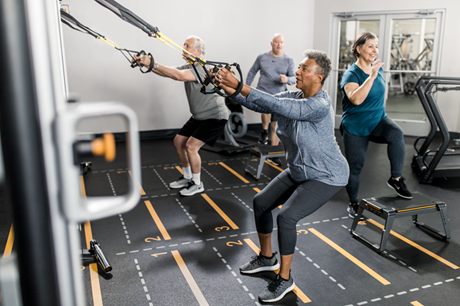
Designing a functional training zone requires a strategic layout that balances open floor space with versatile equipment. The space needs to serve independent exercisers with different fitness goals, personal trainers and small group training sessions.
Functional training has become one of the fastest-growing areas in modern fitness facilities. Since becoming a standard feature in gyms, the space allocated to functional training has steadily increased. Many operators now dedicate a significant portion of their gym floor space to functional training activities based on programming needs and member demand.
Before planning the layout, it helps to define what functional training means in a facility setting and how members use this type of space.
What Is Functional Training?
Functional training is any bodyweight or resisted exercise designed to improve the strength, mobility, balance and stability needed to perform everyday activities safely and efficiently.
Rather than isolating individual muscles, functional training focuses on whole-body movement patterns. These exercises help members build practical strength, improve movement control and prepare the body for the physical demands of daily life.
Assess Space and Define Activity Zones
Organizations such as the American College of Sports Medicine publish Health/Fitness Facility Standards and Guidelines that support safer facility planning, adequate floor space and access to equipment.
Start by mapping out activity zones within the functional training area. Clear zones reduce cross-traffic, help members understand where each activity belongs and make the space safer to manage during busy periods.
Common sub-zones include:
Turf Zones
Turf areas support sled pushes, farmer’s walks and agility drills. A laned turf track can help indicate the direction of movement and reduce cross-traffic.
Where race-based training like HYROX and DEKA FIT is popular, operators may choose to align turf lane dimensions with competition formats.
Bodyweight and Core Training Areas
Open floor space supports bodyweight training, core work, mobility exercises and floor-based movement. Medicine balls, BOSU trainers, suspension trainers and mats can be stored nearby for easy access.
Rig and Cable Training Areas
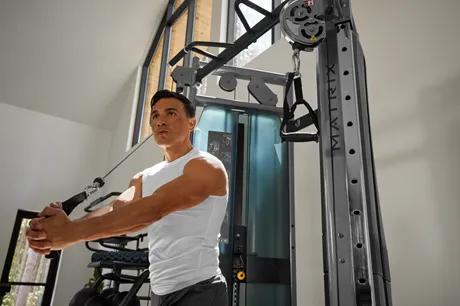
Rigs and cable stations are often the focal point for personal training and small group training sessions. Focus on repeatability by providing multiple units of high-use equipment rather than excessive variety.
Systems such as the Matrix Connexus series can support cable work, suspension training, bodyweight exercises and coached circuits within a single footprint. Triangular configurations within the Connexus series can be useful for corner locations or underused spaces, helping operators preserve more open floor area for movement-based training.
Self-Powered Cardio Zones
Curved treadmills, rowers and air bikes can be moved in and out of the zone to support circuits, group training and independent workouts.
Warm-Up and Recovery Areas
Peripheral spaces with foam rollers, stretch platforms, mats and mobility tools support warm-up, movement preparation and recovery.
Prioritize Movement Over Equipment Density
Overcrowding is one of the most common design mistakes in functional training areas.
Small group training sessions typically include eight to fifteen participants, and each participant may be performing a different exercise at the same time. Place fixed equipment around the perimeter where possible. Keeping the center of the zone open gives members space to move safely between exercises and reduces the risk of collisions with equipment or other users.
Functional training by its nature involves running, jumping, carrying, twisting and changing direction. Open floor space allows members to perform these movements safely and gives coaches greater flexibility when delivering personal training and group sessions.
Select Flooring for Performance and Safety
Functional training includes movements such as pulling, pushing, throwing, jumping and running, so flooring needs to support each of these activities.
Look at grip, shock absorption and comfort for exercises performed kneeling or lying on the floor. The surface should handle sled work, repeated impact and daily use without creating maintenance challenges.
The right flooring choice improves the training experience and helps extend the life of the space.
Integrate Storage into Rigs
Clutter creates safety risks in open training spaces.
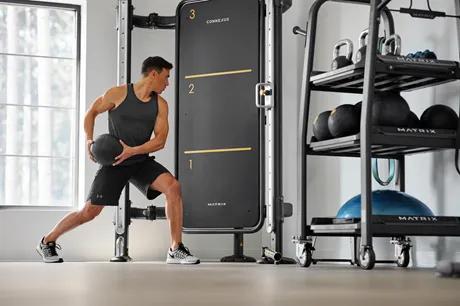
Functional rigs with integrated storage keep equipment close to where it will be used and off the floor when not in use. Racks and shelving for medicine balls, kettlebells, dumbbells and resistance bands encourage members to return equipment after use.
Keeping equipment off the floor increases usable training space, supports faster cleaning and reduces transition time between personal training sessions, group training and classes.
Use Design Features to Guide Behavior
The layout should show members how the space is intended to be used.
A marked turf lane indicates where sled pushes, running drills and jumping exercises should take place. Individual training stations on rubber flooring can help define personal workout areas.
Design details should match the activities members are likely to perform. Wall ball targets can be positioned at HYROX-style heights where appropriate, with women’s targets at 9 feet and men’s targets at 10 feet. Providing a dedicated target gives members a more accurate training experience than a simple line on a wall.
Design can help discourage misuse. Members often throw medicine balls against walls to train speed and power, which can damage some surfaces. A designated impact area, such as a reinforced wall panel, protects the facility and directs members to the right space.
Takeaways
A best functional training zone starts with understanding how the facility operates throughout the day and how members use the space.
Morning users may have very different training habits from members who visit during quieter daytime hours or busy evening periods. The layout should accommodate changing traffic patterns and programming demands without compromising movement space.
Prioritize movement before equipment selection. Create activity zones that support coaching and independent training. Select flooring that can handle varied exercises and include storage that keeps the floor organized.
A well-planned functional training zone gives operators more control over floor use and gives trainers a better coaching environment. Members benefit from a space that supports strength work, conditioning, mobility and group training without feeling crowded.
Frequently Asked Questions
What Is the Most Effective Way to Use a Functional Training Zone to Build Community?
Use the space for group training, member challenges and coached activities.
A whiteboard or digital display can promote group training sessions and post challenges such as "Beat the Trainer" or "How Long Can You Hold a Plank?" Members can record scores, join coached sessions and interact with others using the same area.
This gives the zone a social role within the facility and helps turn individual workouts into shared experiences.
How Can Personal Trainers Use a Functional Training Zone to Increase Client Recruitment and Retention?
Trainers can use small group training sessions to showcase their knowledge, skills and coaching personality.
If members do not purchase personal training when they join, a coached experience or group training session is often their next opportunity to see the value of personal training. A well-planned functional training zone gives trainers a visible platform to interact with members and build future client relationships.
